Journal
MARCH 2026
Exploring the architectural wonders of Tinos
Tinos, often called the “Sacred Island” of the Cyclades, is celebrated not only for its spiritual significance but also for its remarkable architecture. From imposing churches to marble-paved villages and traditional Cycladic houses, the island is a treasure trove for architecture enthusiasts. Its buildings tell stories of history, faith, and artisanal craftsmanship, making Tinos a unique destination for travelers interested in design, heritage, and aesthetics.
The Majestic Churches of Tinos
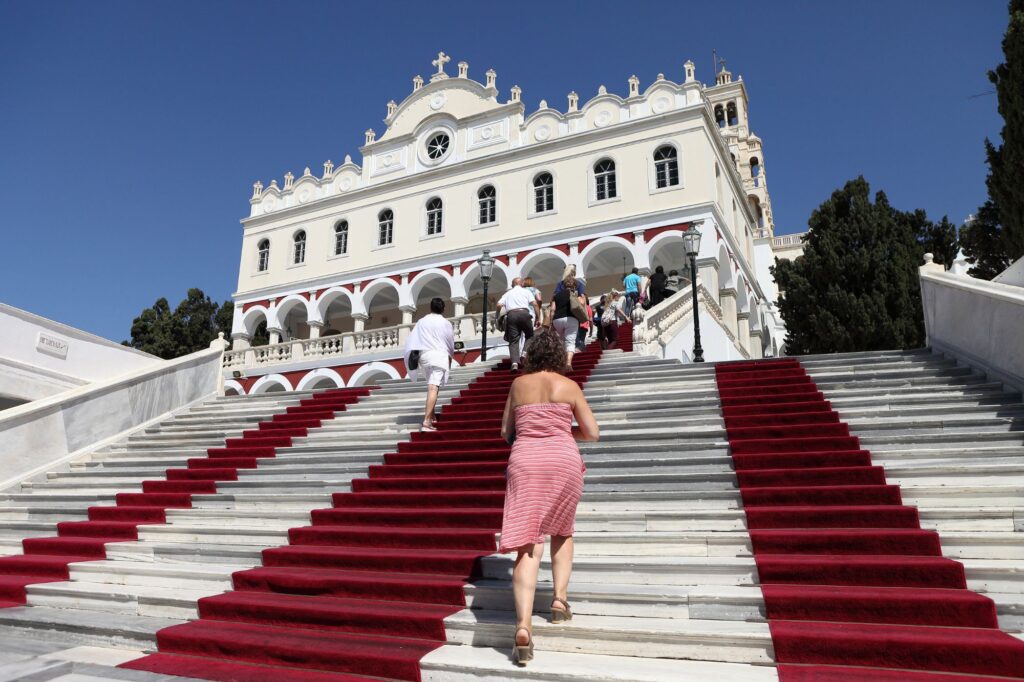
The architecture of Tinos is deeply intertwined with its religious heritage. The most iconic example is the Church of Panagia Evangelistria, or the Church of Our Lady of Tinos. This 19th-century pilgrimage site features a striking bell tower, marble staircases, and an interior adorned with exquisite frescoes and icons. Pilgrims and visitors alike are captivated by its harmonious proportions and intricate details, which reflect both Byzantine and neoclassical influences.
Another architectural gem is the Panagia Tourliani Monastery in Tourliani village. Built in the 16th century and reconstructed in marble during the 18th century, it features an elegant bell tower, spacious courtyard, and a beautifully carved iconostasis. Smaller churches scattered across the island, such as Agios Nikolaos in Pyrgos, showcase traditional Cycladic design: whitewashed walls, domed roofs, and vibrant frescoes, demonstrating the island’s ability to blend simplicity with spiritual grandeur.
Traditional villages and craftsmanship
Tinos’ villages are architectural masterpieces in their own right. Pyrgos is particularly renowned for its marble artistry. The village streets are paved with marble, and many homes display intricately carved facades and doors. Local workshops continue the centuries-old tradition of marble sculpting, creating everything from fountains to decorative ornaments. Walking through Pyrgos feels like exploring an open-air museum where each structure tells a story of craftsmanship and heritage.
Other villages, such as Volax, offer a unique architectural experience set against dramatic natural landscapes. Houses are built around large boulders, forming a harmonious relationship between man-made structures and the rugged terrain. Narrow alleys, stone steps, and traditional ovens provide insight into the island’s architectural adaptation to its environment, reflecting both functionality and aesthetic charm.
Coastal architecture and seaside structures
Tinos’ coastal areas also showcase distinctive architectural features. Chora, the island’s capital, is a blend of traditional Cycladic houses with neoclassical mansions, narrow marble alleys, and quaint squares. The waterfront is dotted with small chapels and churches that highlight local religious architecture, providing a serene complement to the bustling harbor.
Seaside villages like Agios Fokas combine simplicity and elegance. Whitewashed houses with blue shutters face the Aegean, creating picturesque streetscapes that are quintessentially Cycladic. Small fishing huts and boathouses reflect the island’s maritime heritage, while elegantly restored mansions hint at Tinos’ historical prosperity. The architecture along the coast is not only visually appealing but also functional, designed to withstand the island’s strong winds and salty air.
Tinos is an architectural treasure that harmoniously blends spirituality, tradition, and natural beauty. From the grand churches of Panagia Evangelistria and Panagia Tourliani to the marble streets of Pyrgos and the boulder-integrated homes of Volax, the island offers a diverse and inspiring architectural landscape. Every corner of Tinos tells a story, inviting visitors to explore its artistic and historical heritage while appreciating the ingenuity and aesthetic sensibilities of its people.
Your Summer Awaits
Whether you seek the refined vibrance of Paros or the tranquil authenticity of Tinos, the Cyclades offer something rare: space to breathe.
BOOK YOUR STAY; ?>/assets/img/arrow-right.png)
From The Journal
READ THE JOURNAL