Journal
AUGUST 2026
Autumn in the Cyclades
Autumn brings a different character to the Cyclades. As the intensity of July and August fades, the islands become calmer, temperatures soften and daily life gradually returns to a slower rhythm. The sea often remains warm enough for swimming well into September, while cooler mornings and evenings make walking, sightseeing and long lunches far more comfortable. For travellers who prefer atmosphere over crowds, this can be one of the most rewarding times to visit.
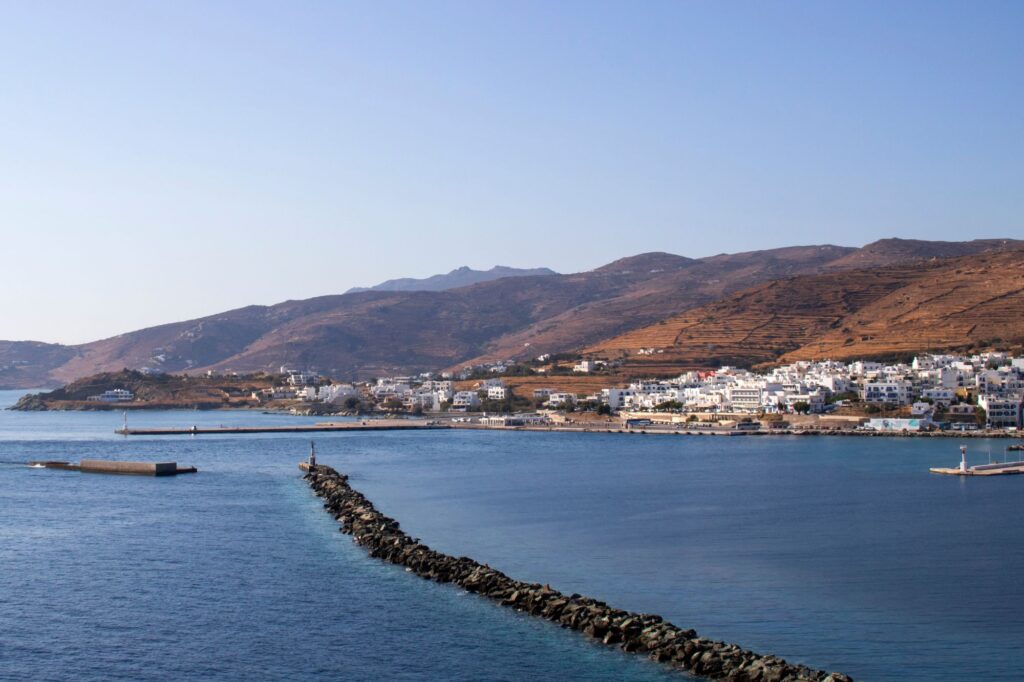
Tinos: Villages, trails and more
Tinos is an island that rewards curiosity. Its main town is best known for the Church of Panagia Evangelistria, one of Greece’s most important pilgrimage sites, but the island’s real depth becomes apparent when travelling inland.
Scattered across the hills are dozens of villages connected by old paths, narrow roads and terraced landscapes. Autumn is one of the best seasons for exploring them, as the cooler weather makes walking much more enjoyable. Traditional dovecotes, stone walls and small chapels appear throughout the countryside, creating a landscape that feels carefully shaped by generations of island life.
Pyrgos is among the most distinctive villages on Tinos. Famous for its marble tradition, it is filled with carved doorways, decorative details and elegant squares. Its artistic heritage remains an important part of local identity, and the quieter autumn months make it easier to appreciate the village without the summer rush.
Volax offers a very different experience. Surrounded by enormous rounded granite rocks, the village sits within one of the island’s most unusual landscapes. Small craft workshops and traditional homes add to its character, while nearby walking routes provide an excellent way to experience Tinos at a slower pace.
Paros: Coastal charm and peace
Paros is one of the most popular islands in the Cyclades, but its atmosphere changes considerably after the peak of summer. By September, the pace becomes gentler, giving visitors more space to enjoy its villages, beaches and historic towns.
Naoussa is a good example. During high summer, its picturesque harbour becomes one of the busiest spots on the island. In autumn, the same whitewashed lanes, fishing boats and waterfront restaurants remain, but the experience feels far less hurried. Evenings are still lively, particularly in September, yet there is more room for relaxed dinners and slow walks around the harbour.
Parikia, the island’s capital, is equally rewarding. Its old town is a maze of narrow streets, traditional houses and small churches, while the historic Panagia Ekatontapiliani offers a glimpse into the island’s long religious and architectural history.
Autumn is also an ideal time to discover the interior of Paros. Lefkes, surrounded by hills and olive trees, has a peaceful atmosphere and wide views across the island. From here, visitors can follow sections of the Byzantine Road, an old stone path that links several traditional settlements.
As the season progresses, Paros becomes steadily quieter. Some seasonal businesses begin to close in October, but the reward is a more authentic sense of island life. Combined with warm early-autumn seas and mild walking weather, this makes Paros an appealing alternative to a crowded summer holiday.
Together, Tinos and Paros show another side of the Cyclades, which is slower, quieter and more connected to the landscapes and communities that define the islands beyond the beach season.
Your Summer Awaits
Whether you seek the refined vibrance of Paros or the tranquil authenticity of Tinos, the Cyclades offer something rare: space to breathe.
BOOK YOUR STAY; ?>/assets/img/arrow-right.png)
From The Journal
READ THE JOURNAL