Journal

NOVEMBER 2026
Secrets of the Aegean
There are islands in the Aegean that announce themselves with famous beaches, lively ports and postcard views. And then there are islands that reveal themselves more slowly. Paros and Tinos belong to both worlds. They are beautiful at first glance, but their real charm lies beyond the obvious: in quiet villages, small chapels, old footpaths, shaded courtyards and the easy rhythm of island life. To discover them fully is to leave the busiest paths behind and experience the Aegean at its most authentic.
Paros: Beauty beyond the blue
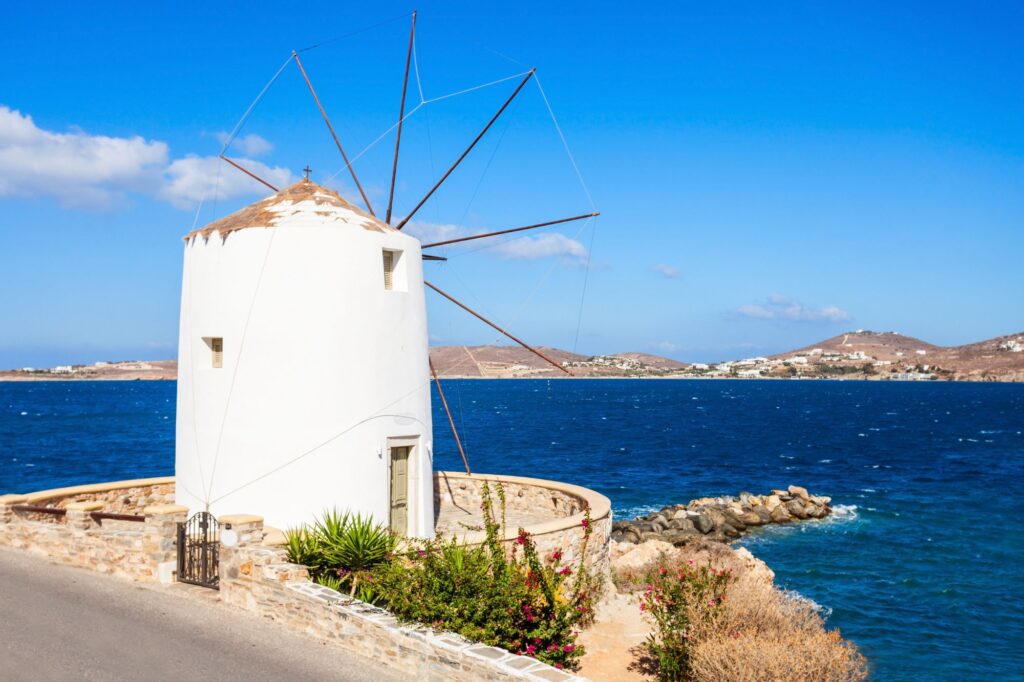
Paros is often associated with whitewashed houses, bright bougainvillea and clear blue water. Naoussa, with its small fishing harbour, elegant shops and waterfront tables, has become one of the most photographed places in the Cyclades. Yet the island feels very different once you leave the coast behind.
In the hills, villages such as Lefkes offer another side of Paros. Narrow stone lanes climb between traditional houses, while old churches and small squares appear around unexpected corners. The pace is slower here. Morning light falls across the rooftops, cafés fill gently, and the sound of footsteps replaces the noise of beach bars.
Old walking paths cross the landscape, connecting villages through olive groves and dry stone walls. Following them is one of the simplest ways to understand the island. Paros is not only about where you arrive, but about the spaces in between.
Along the coast, quieter beaches can still be found away from the most popular stretches of sand. A small cove, a late swim or a taverna table close to the water can feel more memorable than a carefully planned day.
The secret of Paros is balance. It can be lively or peaceful, polished or traditional. The island allows you to choose your own pace.
Tinos: An island of stone and soul
Tinos has a different character. It feels more rugged, more mysterious and deeply connected to its landscape.
The island is famous for its religious importance, but beyond the town of Tinos lies a world of extraordinary villages. Marble doorways, carved fountains, dovecotes and stone terraces appear across the countryside. In places such as Pyrgos, craftsmanship is part of everyday life. Marble is not simply decoration here; it is part of the island’s identity.
Tinos rewards curiosity. Roads wind through hills towards villages that seem almost hidden from view. Small cafés sit beneath plane trees. Tiny chapels stand alone above the sea. In the distance, the Aegean stretches towards neighbouring islands, changing colour with the light.
Food is another quiet pleasure. Local cheeses, vegetables, herbs and simple dishes reflect the island’s farming traditions. Meals are often unpretentious: fresh ingredients, a glass of wine and time to sit without hurry.
The wind, always present, gives Tinos a wild beauty. It moves through the hills, shapes the trees and clears the sky. Instead of softening the island, it makes its character stronger.
Two islands, one Aegean spirit
Paros and Tinos are different, but they share something essential. Both invite travellers to look beyond the familiar image of the Greek islands.
Their greatest pleasures are often small: a quiet square before noon, a swim at the end of the day, a village bakery, an open church door, a table facing the sea.
The Aegean has many famous places. But its real secrets are not always hidden. Sometimes, they are simply waiting for us to slow down enough to notice them.
Your Summer Awaits
Whether you seek the refined vibrance of Paros or the tranquil authenticity of Tinos, the Cyclades offer something rare: space to breathe.
BOOK YOUR STAY; ?>/assets/img/arrow-right.png)
From The Journal
READ THE JOURNAL